



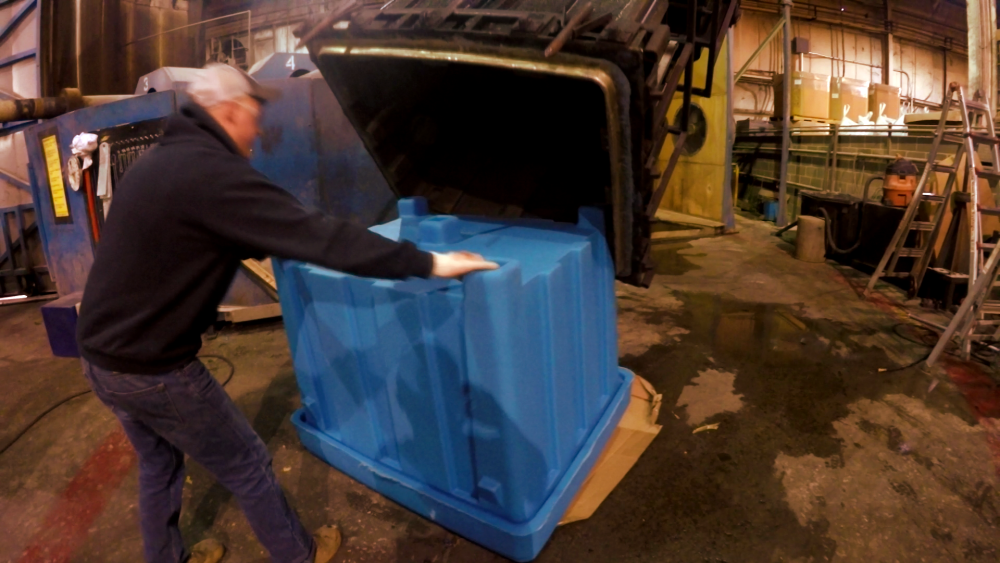
Rotational Molding Process
What is the Rotational Molding Process?
The Rotational Molding Process—commonly referred to as Rotomolding—is a highly specialized plastic manufacturing method engineered to produce exceptionally durable, seamless, and long-lasting hollow parts. Unlike conventional plastic processes that rely on pressure to force material into a mold, Rotational Molding uses controlled heat and biaxial rotation to evenly distribute and fuse resin within a closed mold cavity.
This unique approach allows manufacturers to create complex geometries, uniform wall thicknesses, and stress-free parts that deliver superior performance in demanding applications.
How the Rotational Molding Process Works
The Rotational Molding Process follows a precise four-stage manufacturing cycle designed to ensure consistent quality and structural integrity in every part produced. Once the design for rotomolding is finalized and the necessary molds for rotomolding are produced, the rotational molding manufacturing process will operate as follows :
Stage One: Loading
Finely ground polymer resin—typically in powder form—is carefully measured and loaded into a preheated mold. The mold is then securely sealed to prevent material loss during rotation.
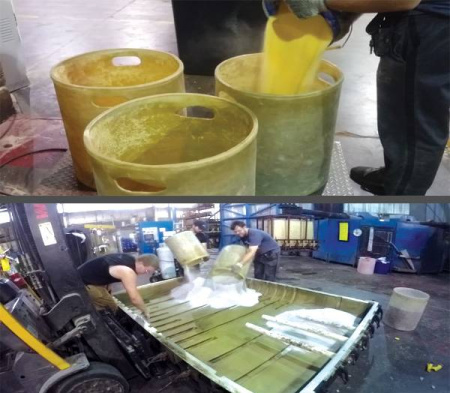
Stage Two: Heating
The mold enters a high-temperature oven where it rotates slowly on two perpendicular axes. As heat is applied, the resin melts and uniformly coats the interior surfaces of the mold, forming a consistent, seamless wall structure without the need for pressure.
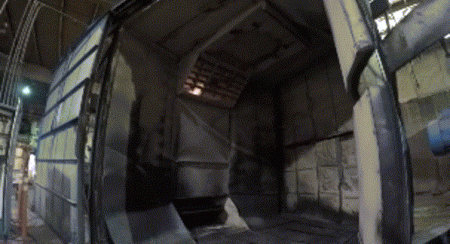
Stage Three: Cooling
After the heating cycle, the mold transitions to a controlled cooling chamber. While continuing to rotate, the part is gradually cooled using air, water spray, or a combination of both. This controlled cooling process enhances material stability, reduces internal stress, and preserves dimensional accuracy.
Stage Four: Unloading
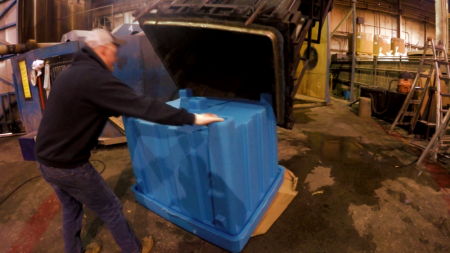
Once cooled, the mold is opened and the finished part is removed. The mold is then prepared for the next production cycle, ensuring efficient and repeatable manufacturing.
Materials Used in Rotomolding
The versatility of the Rotational Molding Process is further enhanced by its broad material compatibility. While polyethylene (PE) remains the most widely used resin due to its durability and cost-effectiveness, other materials include:
- Nylon
- Polypropylene (PP)
- Polycarbonate (PC)
- Fluoropolymers
- Plastisols
- Polyurethane
- Elastomers
These materials enable tailored performance characteristics such as chemical resistance, UV stability, impact strength, and flexibility.
Advantages of Rotational Molding
The Rotomolding Process offers distinct advantages over other plastic manufacturing methods:
- Seamless, one-piece construction for enhanced strength and leak resistance
- Uniform wall thickness with no weak points or weld lines
- Low tooling costs compared to injection or blow molding
- Design flexibility for complex shapes and large hollow parts
- Minimal material waste for cost-efficient production
- Excellent durability in harsh environments
Common Rotationally Molded Products
- Chemical storage tanks and secondary containment systems
- Agricultural and bulk storage tanks
- Plastic dumpsters, bins, and liners
- Shipping containers and pallets
- Playground equipment and recreational products
- Marine buoys and flotation devices
- Septic tanks and piping systems
- Barriers, housings, and industrial enclosures
Many of these products would be difficult—or impossible—to produce using other plastic manufacturing processes.
Partner with Experts in Rotational Molding
If you’re evaluating whether the Rotational Molding Process is the right fit for your next project, the team at Granger Plastics Company is ready to help. From design consultation and material selection to full-scale production, we provide the expertise and capabilities needed to bring your concept to life with precision and reliability.
Contact us today at 513-424-1955 to schedule a detailed evaluation and receive a competitive quote.